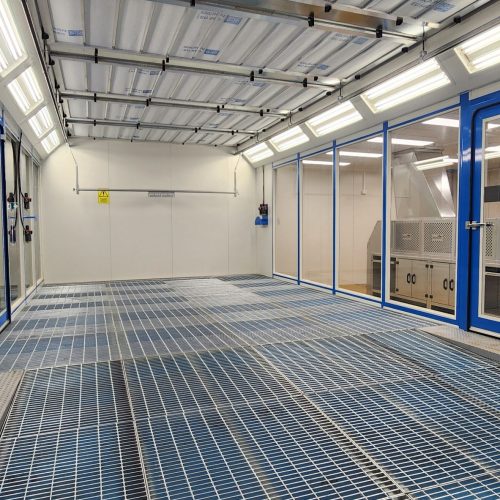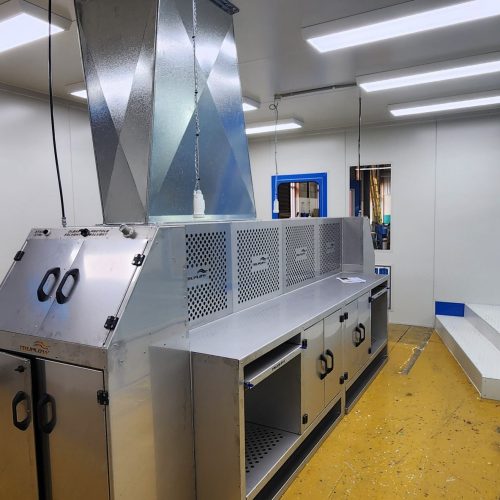
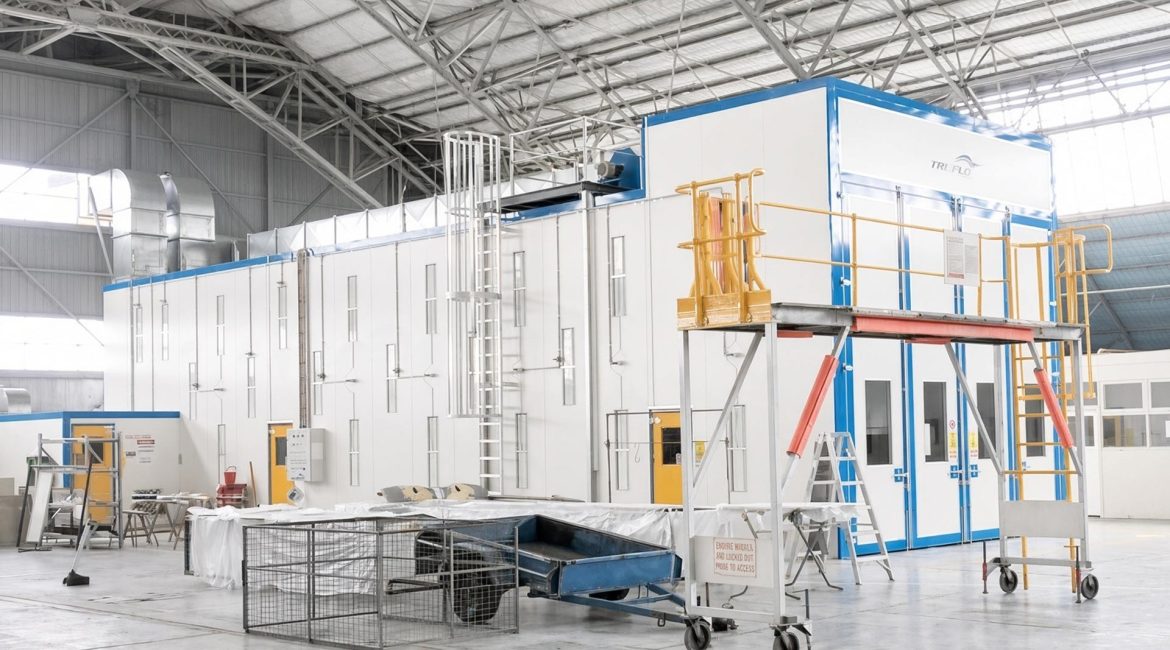
Planning a new spray booth involves more than choosing the right booth. Spray Booth project management covers site planning, building requirements, trades, approvals, installation and certification. If you are planning a new automotive or industrial spray booth, knowing what to expect can help prevent delays and unexpected costs.
1. Start With Your Site Requirements
The first step in spray booth project management is understanding your site. Consider the available floor space, roof height and clearance around the booth. You also need to consider how vehicles, equipment and materials will enter the building. Check your roller door size and access points before the booth is designed. This helps ensure the completed system can be installed and used effectively.
2. Plan Your Services and Trades
A spray booth can require coordination between several trades. Depending on your project, you may need to organise electrical work, gas services, roof plumbing and building works. You should also consider where your mains services are located and how they will connect to the booth. Early trade coordination helps keep the installation process moving.
3. Consider Approvals and Compliance
Spray Booth Compliance is an important part of the planning process. Spray booths must meet applicable Australian requirements, including AS/NZS 4114:2020. Truflow also considers ventilation, filtration, hazardous areas and safety controls during the design process.
Council approvals, planning requirements and other local regulations may also apply. These requirements can vary depending on your location and project.
4. Understand Spray Booth Certification
Spray Booth Certification requirements can differ between Australian states and territories. The relevant authorities and approval processes depend on your location, building and installation. Therefore, confirm your local requirements before work begins. Your spray booth supplier should also help identify the documentation and certification required for your project.
5. Allow for Installation and Commissioning
Once the site is ready, the booth can be installed and commissioned. This may involve coordinating the booth installation with electrical, mechanical and building contractors. A well-managed project should also allow time for testing, commissioning and final certification before the booth enters operation. Truflow provides project management for installations, including coordination of site works and commissioning.
Frequently Asked Questions
In Victoria, spray booth projects need to consider AS/NZS 4114, hazardous area requirements, electrical and gas safety, and workplace health and safety obligations. WorkSafe Victoria provides specific guidance for spraying flammable liquids, including requirements for spray booth airflow and respiratory protection. Depending on the booth design and heating system, additional engineering, electrical and gas certification may also be required.
In NSW, spray painting and powder coating workplaces are covered by the Spray Painting and Powder Coating Code of Practice. Spray booth projects need to consider AS/NZS 4114 requirements alongside ventilation, hazardous area, electrical, gas and workplace safety requirements. Local planning and environmental requirements may also apply.
Queensland has a specific Spray Painting and Powder Coating Code of Practice 2021. Projects need to consider AS/NZS 4114, ventilation and extraction, hazardous area and electrical requirements, and workplace health and safety obligations. Local planning and environmental approvals may also apply depending on the site and installation.
In South Australia, spray booth projects need to consider AS/NZS 4114, workplace health and safety requirements, electrical and hazardous area requirements, and any applicable environmental and planning approvals. The exact certification requirements can depend on the booth design, heating system and site.
In Western Australia, spray booth installations need to consider AS/NZS 4114, hazardous area classification, electrical and gas requirements, workplace safety and environmental obligations. Local planning requirements may also apply depending on the installation and location.
In the ACT, spray painting and powder coating activities are subject to specific workplace safety requirements. A spray booth project should consider AS/NZS 4114, hazardous area and electrical requirements, gas safety where applicable, and relevant planning and environmental approvals.
In Tasmania, spray booth projects should consider AS/NZS 4114 alongside workplace health and safety, electrical, gas, hazardous area and environmental requirements. Local approvals may also apply depending on the project and site.
In the Northern Territory, spray booth projects should consider AS/NZS 4114 together with applicable workplace safety, electrical, gas, hazardous area, environmental and local approval requirements.